
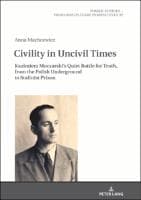
Civility in Uncivil Times : Kazimierz Moczarski's Quiet Battle for Truth, from the Polish Underground to Stalinist Prison
- Format
- Digital book
- Language
- Not available
- Publisher
- Not available
- SKU
- Not available
Digital access
Verify once to reveal the links, then copy and open them externally.
Kazimierz Moczarski (1907–1975) was a journalist, soldier, and political prisoner. His life exemplifies a Central European biography under Nazism and Comunism. The addictive and moving Civility in Uncivil Times reveals the story of a man who defended law and democracy all his life. Moczarski fought for it in the authoritarian Poland of the 1930s. During the Second World War, he partook in the resistance movement. After the war, he spent eleven years in a Stalinist prison, including nine months in one cell with the Nazi Jürgen Stroop, who commanded the brutal pacification of the Warsaw Ghetto. The communists imprisoned Moczarski’s wife. After release, he rebuilt the broken marriage, rejoined social life, and wrote a work about meeting Stroop. Translated into many languages, Conversations with the Executioner is a thorough study of totalitarianism.
About this book
Kazimierz Moczarski (1907–1975) was a journalist, soldier, and political prisoner. His life exemplifies a Central European biography under Nazism and Comunism. The addictive and moving Civility in Uncivil Times reveals the story of a man who defended law and democracy all his life. Moczarski fought for it in the authoritarian Poland of the 1930s. During the Second World War, he partook in the resistance movement. After the war, he spent eleven years in a Stalinist prison, including nine months in one cell with the Nazi Jürgen Stroop, who commanded the brutal pacification of the Warsaw Ghetto. The communists imprisoned Moczarski’s wife. After release, he rebuilt the broken marriage, rejoined social life, and wrote a work about meeting Stroop. Translated into many languages, Conversations with the Executioner is a thorough study of totalitarianism.