
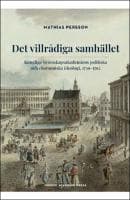
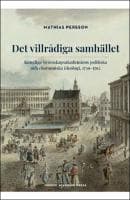
Det villrådiga samhället : Kungliga Vetenskapsakademiens politiska och ekonomiska ideologi, 1739–1792
About this book
The Royal Academy of Sciences was an important organization in eighteenth-century Sweden. It brought together scientists and scholars contributing to a wide spectrum of areas, encompassing nature as well as society. But it also maintained close ties to the elite and the political establishment. The academy formed part of the institutional landscape of power and functioned as a consultive body and an arena for the upper echelons of the Swedish realm. The monograph sheds light on the political and economic outlook of the Royal Academy of Sciences during the period 1739–1792 against the background of its intimate connections to the ruling stratum. Not least the Hat Party, which dominated the Swedish political scene during the Age of Liberty, and the autocratic King Gustav III. The study shows that the members of the academy overall gravitated towards traditional viewpoints and that their conceptualizations of society were substantially affected by their interactions with the power holders. While some fellows offered new ideas in line with an increasing contemporary emphasis on spontaneous societal development and the capability of individuals to act responsibly on their own accord, such notions were by no means prevalent. Moreover, the book demonstrates that neither the academy nor its members constituted a passive tool for the elite and the powers that be. Rather, they engaged in self-promotion by attributing themselves a crucial role in the project of general improvement they envisioned and added to.
Format
Digital book
Language
Not available
Publisher
Not available
SKU
Not available
Sponsored
Tanow helps you turn reading inspiration into action.
Save quotes, organize priorities, and track progress in a cleaner daily workflow built for focus.
Quote capture
Store meaningful lines and revisit them faster.
Daily planning
Keep tasks visible and simple throughout the day.
Habit progress
Build consistency with lightweight progress tracking.
Get Tanow on Google Play4.8/5 rating and 10,000+ downloads
TanowFocus Mode
Small actions repeated every day create visible progress.
Reading goal80%
Habit streak60%
Product details
The Royal Academy of Sciences was an important organization in eighteenth-century Sweden. It brought together scientists and scholars contributing to a wide spectrum of areas, encompassing nature as well as society. But it also maintained close ties to the elite and the political establishment. The academy formed part of the institutional landscape of power and functioned as a consultive body and an arena for the upper echelons of the Swedish realm. The monograph sheds light on the political and economic outlook of the Royal Academy of Sciences during the period 1739–1792 against the background of its intimate connections to the ruling stratum. Not least the Hat Party, which dominated the Swedish political scene during the Age of Liberty, and the autocratic King Gustav III. The study shows that the members of the academy overall gravitated towards traditional viewpoints and that their conceptualizations of society were substantially affected by their interactions with the power holders. While some fellows offered new ideas in line with an increasing contemporary emphasis on spontaneous societal development and the capability of individuals to act responsibly on their own accord, such notions were by no means prevalent. Moreover, the book demonstrates that neither the academy nor its members constituted a passive tool for the elite and the powers that be. Rather, they engaged in self-promotion by attributing themselves a crucial role in the project of general improvement they envisioned and added to.