
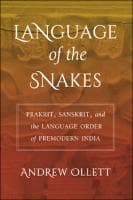
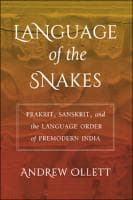
Language of the Snakes
About this book
Language of the Snakes traces the history of the Prakrit language as a literary phenomenon, starting from its cultivation in courts of the Deccan in the first centuries of the common era. Although little studied today, Prakrit was an important vector of the kāvya movement and once joined Sanskrit at the apex of classical Indian literary culture. The opposition between Prakrit and Sanskrit was at the center of an enduring “language order” in India, a set of ways of thinking about, naming, classifying, representing, and ultimately using languages. As a language of classical literature that nevertheless retained its associations with more demotic language practices, Prakrit both embodies major cultural tensions—between high and low, transregional and regional, cosmopolitan and vernacular—and provides a unique perspective onto the history of literature and culture in South Asia.
Format
Digital book
Language
Not available
Publisher
Not available
SKU
Not available
Sponsored
Tanow helps you turn reading inspiration into action.
Save quotes, organize priorities, and track progress in a cleaner daily workflow built for focus.
Quote capture
Store meaningful lines and revisit them faster.
Daily planning
Keep tasks visible and simple throughout the day.
Habit progress
Build consistency with lightweight progress tracking.
Get Tanow on Google Play4.8/5 rating and 10,000+ downloads
TanowFocus Mode
Small actions repeated every day create visible progress.
Reading goal80%
Habit streak60%
Product details
Language of the Snakes traces the history of the Prakrit language as a literary phenomenon, starting from its cultivation in courts of the Deccan in the first centuries of the common era. Although little studied today, Prakrit was an important vector of the kāvya movement and once joined Sanskrit at the apex of classical Indian literary culture. The opposition between Prakrit and Sanskrit was at the center of an enduring “language order” in India, a set of ways of thinking about, naming, classifying, representing, and ultimately using languages. As a language of classical literature that nevertheless retained its associations with more demotic language practices, Prakrit both embodies major cultural tensions—between high and low, transregional and regional, cosmopolitan and vernacular—and provides a unique perspective onto the history of literature and culture in South Asia.