
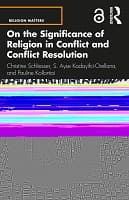
On the Significance of Religion in Conflict and Conflict Resolution
- Format
- Digital book
- Language
- Not available
- Publisher
- Not available
- SKU
- Not available
Digital access
Verify once to reveal the links, then copy and open them externally.
" In this ground-breaking volume, the authors analyze the role of religion in conflict and conflict resolution. They do so from the perspectives of Judaism, Christianity and Islam, while bringing different disciplines into play, including peace and conflict studies, religious studies, theology and ethics. With much of current academic, political and public attention focusing on the conflictive dimensions of religion, this book also explores the constructive resources of religion for conflict resolution and reconciliation. Analyzing the specific contributions of religious actors in this field, their potentials and possible problems connected with them, this book sheds light on the concrete contours of the oftentimes vague “religious factor” in processes of social change. Case studies in current and former settings of violent conflict such as Israel, post-genocide Rwanda and Pakistan provide “real life” contexts for discussion. Combining cutting-edge research with case studies and concrete implications for academics, policy makers and practitioners, this concise and easily accessible volume helps to build bridges between these oftentimes separated spheres of engagement."
About this book
" In this ground-breaking volume, the authors analyze the role of religion in conflict and conflict resolution. They do so from the perspectives of Judaism, Christianity and Islam, while bringing different disciplines into play, including peace and conflict studies, religious studies, theology and ethics. With much of current academic, political and public attention focusing on the conflictive dimensions of religion, this book also explores the constructive resources of religion for conflict resolution and reconciliation. Analyzing the specific contributions of religious actors in this field, their potentials and possible problems connected with them, this book sheds light on the concrete contours of the oftentimes vague “religious factor” in processes of social change. Case studies in current and former settings of violent conflict such as Israel, post-genocide Rwanda and Pakistan provide “real life” contexts for discussion. Combining cutting-edge research with case studies and concrete implications for academics, policy makers and practitioners, this concise and easily accessible volume helps to build bridges between these oftentimes separated spheres of engagement."