
Osmanen in Hamburg - eine Beziehungsgeschichte zur Zeit des Ersten Weltkrieges
- Format
- Digital book
- Language
- Not available
- Publisher
- Not available
- SKU
- Not available
Digital access
Verify once to reveal the links, then copy and open them externally.
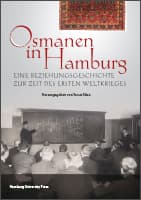
The exhibition "Osmanen in Hamburg - a relationship history during the First World War" which was shown in the Hambrug State and University Library from November 6th, 2014 to January 4th, 2015, devoted itself to the 100th anniversary of the "Urkatastrophe" (the Great War) to he German-Ottoman relations from the perspective of Hamburg, and focused on the years between 1914 and 1918.The archival objects were presented for the first time and are documented in this publication. They illustrate not only economic, diplomatic and cultural contacts., but also give an impression of the presence and the life of the ethnically and religiously heterogeneous group of the Ottomans (e.g. Armenians, Greeks, Sephardic Jews, Muslim Turks) in Hamburg who can be traced back to the 19th century.This catalog, however, does not only want to document the exhibition which was divided into eight sections. With an additional eight contributions, it provides a deeper insight into the complex and ambivalent Ottoman-German and/ or Hamburg-Ottoman relations. In addition to transcultural encounters such as cultural differences between the time of 1850 and 1909 the colonial ambitions and oriental emblems of the German Reich, as well as the role of German women in the Ottoman Empire between 1914 and 1918, are illuminated in three chapters.
About this book
The exhibition "Osmanen in Hamburg - a relationship history during the First World War" which was shown in the Hambrug State and University Library from November 6th, 2014 to January 4th, 2015, devoted itself to the 100th anniversary of the "Urkatastrophe" (the Great War) to he German-Ottoman relations from the perspective of Hamburg, and focused on the years between 1914 and 1918.The archival objects were presented for the first time and are documented in this publication. They illustrate not only economic, diplomatic and cultural contacts., but also give an impression of the presence and the life of the ethnically and religiously heterogeneous group of the Ottomans (e.g. Armenians, Greeks, Sephardic Jews, Muslim Turks) in Hamburg who can be traced back to the 19th century.This catalog, however, does not only want to document the exhibition which was divided into eight sections. With an additional eight contributions, it provides a deeper insight into the complex and ambivalent Ottoman-German and/ or Hamburg-Ottoman relations. In addition to transcultural encounters such as cultural differences between the time of 1850 and 1909 the colonial ambitions and oriental emblems of the German Reich, as well as the role of German women in the Ottoman Empire between 1914 and 1918, are illuminated in three chapters.